
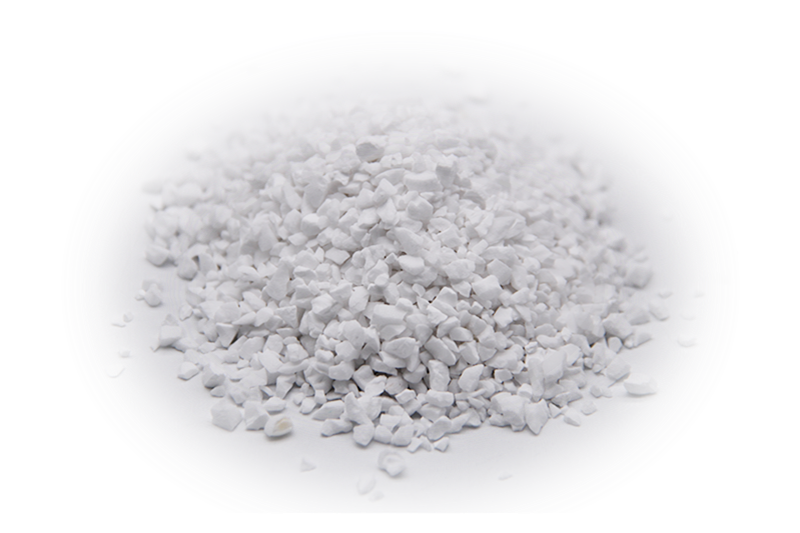
In the rapidly evolving landscape of industrial manufacturing and materials technology, tabular alumina has emerged as a critical component due to its exceptional physical and chemical properties. Recognized widely for its high purity and superior structural characteristics, tabular alumina is increasingly employed across various sectors, driving innovation and efficiency.
Tabular alumina is a form of white fused alumina produced by heating alumina to extremely high temperatures, allowing the particles to fuse together into dense, crystalline structures. This unique manufacturing process imparts the material with outstanding thermal stability, excellent abrasion resistance, and high mechanical strength. These qualities make tabular alumina an indispensable material in fields such as refractory manufacturing, abrasives, ceramics, and metallurgy.
**Primary Applications of Tabular Alumina**
One of the main uses of tabular alumina is in the production of refractory materials. Refractories are heat-resistant materials critical for lining furnaces, kilns, reactors, and other high-temperature processing units. Due to its high melting point (around 2072°C), thermal shock resistance, and chemical inertness, tabular alumina-based refractories help improve operational efficiency and longevity of high-temperature equipment. They provide enhanced resistance to corrosion by slag and other aggressive substances, reducing downtime and maintenance costs.
Additionally, tabular alumina is used extensively as a raw material for the manufacture of high-quality abrasive products. Its hardness and crystalline structure enable it to serve as an effective grinding, polishing, and cutting agent. Industries ranging from metalworking to electronics benefit from abrasives made with tabular alumina, which offer superior wear resistance, longer lifespan, and consistent performance compared to other abrasive materials.
In the ceramics industry, tabular alumina is incorporated into advanced porcelains and technical ceramics. It improves the mechanical properties and refractoriness of these materials, enabling applications in electronics, aerospace, and automotive parts. Its excellent dielectric properties and resistance to high temperature make it suitable for producing insulation parts and other critical ceramic components.
Metallurgical applications also leverage tabular alumina’s properties, especially in the production of aluminum and steel. In aluminum smelting, tabular alumina-based refractories contribute to efficient containment of molten aluminum and protection of furnaces. In steelmaking, they facilitate refractory linings that withstand intense heat and erosive conditions, ensuring safer and more reliable operations.
**About the Manufacturer**
With over two decades of experience in the industry, HENAN JUNSHENG REFRACTORIES LIMITED stands out as a distinguished manufacturer and trader of refractory and abrasive raw materials. The company is committed to delivering high-quality products that meet stringent industrial standards. Their expertise is reflected in the ability to produce a wide range of refractory materials that depend heavily on advanced science and innovative technology, supported by modern equipment and rigorous process management.
HENAN JUNSHENG REFRACTORIES LIMITED continuously invests in research and development to optimize the production of tabular alumina and related raw materials. This dedication enables the company to cater to the specialized needs of customers across different industrial sectors, offering tailored solutions that enhance product performance and operational efficiency.
Moreover, the firm’s commitment to quality control ensures that each batch of raw materials passes through exacting standards before reaching clients. This approach has earned them a reputable standing in the market and longstanding partnerships worldwide.
**Driving Industry Advancements**
The demand for tabular alumina is set to rise as industries seek materials that can withstand harsher environments while reducing overall operational costs. Innovations in processing technology have made it possible to produce tabular alumina with tighter quality controls and enhanced performance specifications, further expanding its applications.
The refractory industry, in particular, benefits greatly from these advances, as furnaces and reactors become more sophisticated, operating under higher temperatures and more aggressive conditions. Tabular alumina’s ability to maintain structural integrity under such conditions makes it invaluable in the design of next-generation refractory linings.
Similarly, the abrasive sector continues to adapt tabular alumina technology to create cutting tools and abrasives that deliver precision along with durability. This results in improved manufacturing efficiency and product quality in sectors such as automotive, aerospace, and electronics manufacturing.
**Sustainability and Future Trends**
In addition to performance benefits, tabular alumina’s durability contributes to sustainability by extending the lifespan of refractory linings and abrasive tools, reducing waste and the need for frequent replacements. As industries push towards greener manufacturing processes, materials like tabular alumina that enable longer service life and energy efficiency play an increasingly important role.
Looking ahead, research into nano-scale alumina and composite refractory materials holds promise for new applications and enhanced properties. Companies like HENAN JUNSHENG REFRACTORIES LIMITED continue to lead the charge in innovation, aligning their product development with global industrial trends and environmental considerations.
**Conclusion**
Tabular alumina remains a cornerstone material in modern industry thanks to its exceptional thermal, mechanical, and chemical properties. Its versatility across refractory, abrasive, ceramic, and metallurgical applications highlights its importance in improving industrial processes and product quality. Supported by experienced manufacturers committed to quality and innovation, tabular alumina will continue to drive advancements in materials technology and industrial efficiency for years to come.